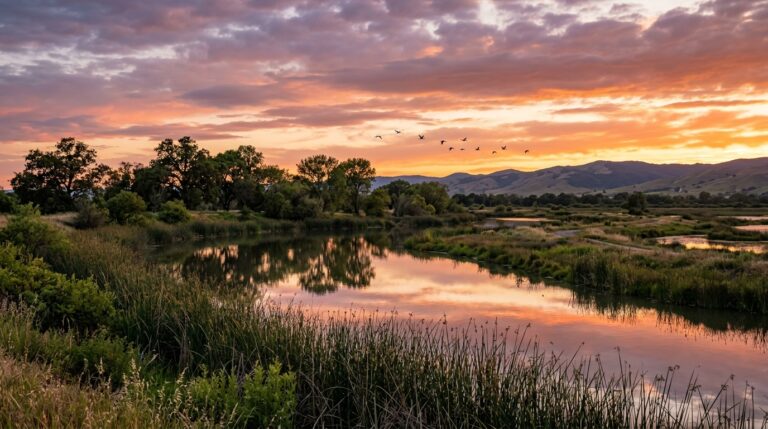
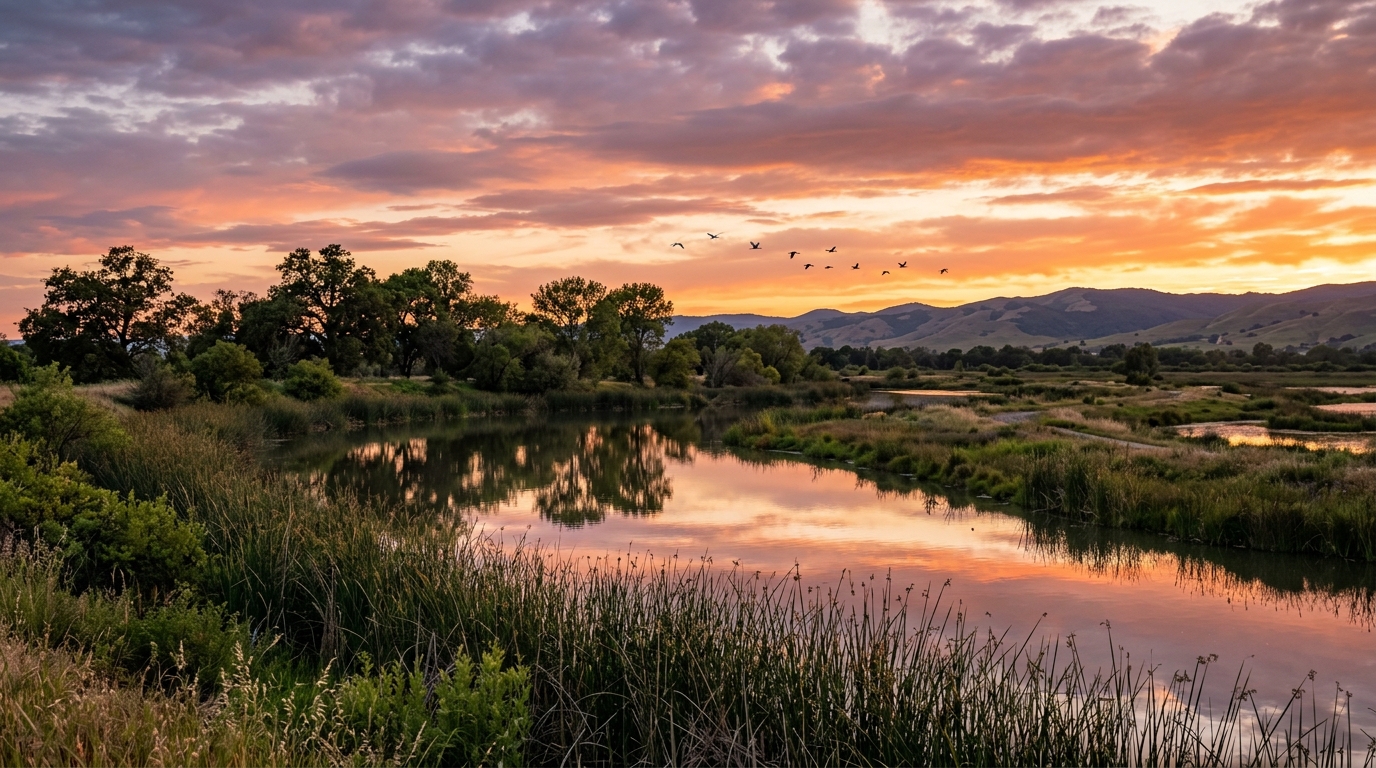
Just west of Woodland, Cache Creek Nature Preserve offers a quieter side of Yolo County that can be easy to miss when a trip focuses only on Davis, wineries, or the major wildlife areas near Interstate 80. Wetlands, riparian habitat, open grasslands, native vegetation, birds, and changing evening light make the preserve particularly appealing to photographers, birdwatchers, families, and visitors looking for a relaxed outdoor stop.
The preserve is also having a notable 2026 season because Cache Creek Conservancy has been opening the property beyond its normal afternoon closing time for selected Sunset Fridays. These evenings give visitors access during the golden hour, when lower light, cooler temperatures, and increased wildlife activity can completely change the character of the landscape.
This guide explains when to visit, how to photograph the preserve responsibly, what wildlife to look for, what to bring, and how to combine the experience with Woodland and Yolo County farm country. Before traveling, also review our Yolo County Outdoors and Wildlife Guide and Plan Your Visit page for broader outdoor and seasonal planning.
Why Cache Creek Nature Preserve Is Worth Visiting in 2026
Experience a Restored Landscape Near Woodland
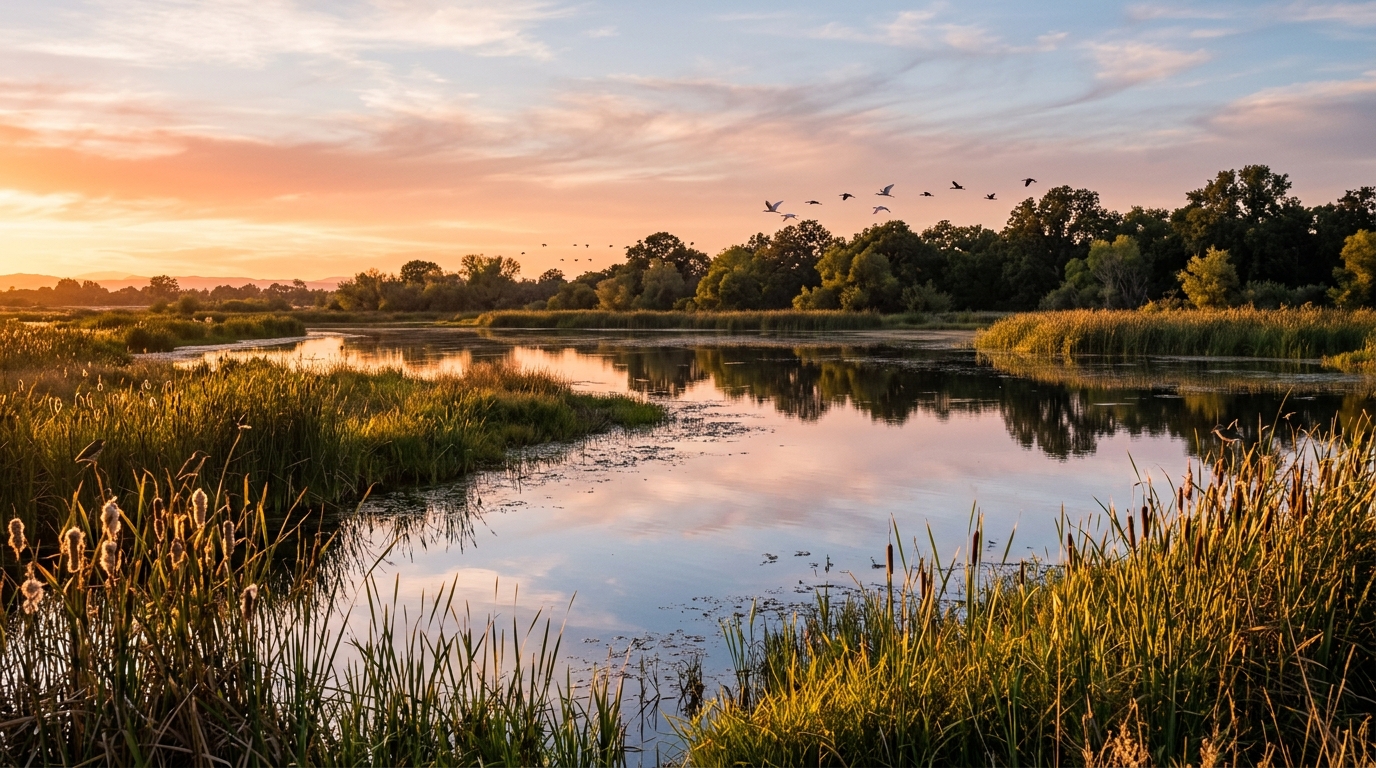
Cache Creek Nature Preserve is located at 34199 County Road 20 near Woodland. The property provides an accessible introduction to some of the habitat types that characterize this part of Yolo County, including wetlands, riparian vegetation, open areas, and restored wildlife habitat.
The setting feels distinctly different from downtown Woodland even though it can be incorporated into the same half-day trip. Visitors move from agricultural roads into a landscape where water, reeds, trees, birds, insects, and seasonal vegetation become the main subjects. The distant Coast Range and surrounding farm country add another layer to the scenery.
Woodland itself sits between several major ecological landscapes. The City of Woodland notes that the surrounding region includes oak woodland, grassland, riparian habitat, the Yolo Bypass to the east, and Capay Valley and the Coast Range to the west. That diversity helps explain why birding and wildlife observation can be rewarding throughout the broader area.
Do not confuse Cache Creek Nature Preserve with Cache Creek Regional Park farther west near Rumsey. The regional park is a separate Yolo County park system with canyon recreation, hiking, camping, and river access. The Nature Preserve near Woodland is managed through Cache Creek Conservancy and has its own hours, programs, and visitor rules.
Regular Hours and the 2026 Sunset Fridays
Cache Creek Conservancy currently lists regular preserve hours as Sunday through Friday from 8 a.m. to 4 p.m., with the property closed on Saturdays. Holiday schedules and special closures may differ, so check current information before making the drive.
The 2026 Sunset Fridays program extends access on selected second Fridays from spring through early fall. As of August 2026, two scheduled evenings remain: August 14, when the gates close at 8 p.m., and September 11, when they close at 7:30 p.m. The events are listed as free.
The later access matters because golden-hour conditions are normally unavailable during the preserve’s regular 4 p.m. closing time. Sunset evenings allow photographers and birders to watch the landscape transition as shadows lengthen, temperatures drop, and wildlife becomes more active.
Always verify the current schedule on the official Cache Creek Conservancy Sunset Fridays page. Weather, site conditions, wildfire concerns, or other operational issues can affect outdoor programs.
Why Golden Hour Changes the Experience
The final hour before sunset produces warmer and lower-angle light than the middle of the day. Reeds and grasses can glow at their edges, water reflects changing sky colors, and distant trees become stronger silhouettes. Photographers can create more dimensional images without needing an elaborate setup.
Golden hour can also improve wildlife observation. The Conservancy specifically encourages birders, photographers, hikers, and wildlife watchers to use the extended access. Quiet visitors may notice movement along water edges, birds changing feeding locations, or animals becoming more active as daytime temperatures decline.
Arrive before the best light rather than showing up immediately before sunset. Walking the trails in daylight gives you time to understand the layout, identify possible compositions, observe where birds are gathering, and avoid rushing back to the parking area before the gates close.
Photograph and Watch Wildlife Without Disturbing the Preserve
A nature preserve is not an outdoor studio where every subject can be repositioned or approached closely. The strongest photographs often come from waiting for natural behavior rather than pursuing wildlife. Move slowly, reduce conversation, and stop regularly to listen.
Cache Creek Conservancy advises Sunset Friday visitors to stay on trails, avoid feeding wildlife, leave pets at home, and follow Leave No Trace principles. Visitors should also remain alert for rattlesnakes, particularly around tall grass, low branches, logs, and holes.
Closed-toe shoes are recommended. Carry drinking water because visitors should not assume potable water will be available along the trail. Sun protection remains useful even for evening visits, particularly during August when temperatures can stay high late in the day.
Simple Photography Tips for Sunset and Wildlife
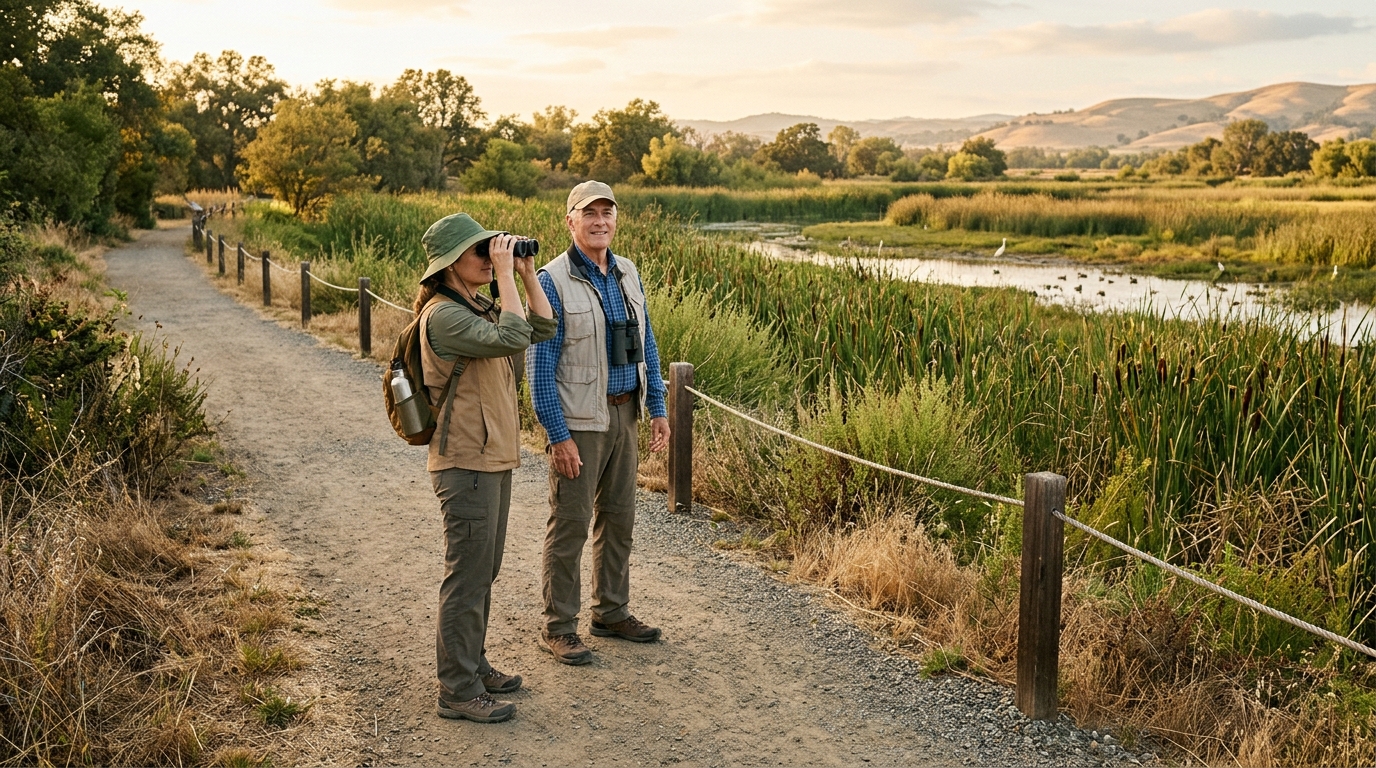
You do not need professional equipment to photograph the preserve effectively. A modern phone can capture broad wetland scenes and sunset color, while an interchangeable-lens camera provides more flexibility for birds and changing light.
For landscapes, expose carefully so the sky does not become completely white around sunset. Use reflections, reeds, trails, and tree lines to create depth. A wide or normal focal length works well for showing the relationship between wetlands and the surrounding landscape.
For birds, a telephoto lens or binoculars are more responsible than walking closer. Increase shutter speed when photographing flying birds, and raise ISO when necessary as the light falls. A slightly noisy photograph is preferable to disturbing an animal for a closer image.
Avoid flash photography around wildlife. Bright artificial light can disrupt the natural evening atmosphere and may disturb animals. Keep phone screens dim, turn off unnecessary sounds, and never use drones simply to obtain a different viewpoint unless current site rules explicitly authorize them.
What Birders and Families Should Bring
Binoculars are the most useful addition for birdwatchers. A field guide or offline identification app can help with species that are difficult to recognize at a distance. Photographing an unfamiliar bird for identification later is often easier than attempting to solve every identification in the field.
Families should bring water, hats, sunscreen, closed-toe shoes, and lightweight layers. Insect repellent can be useful near wetland areas. Children should remain with adults and understand before arrival that wildlife should be watched rather than chased, fed, or handled.
The preserve’s slow pace makes it well suited to visitors who prefer a quiet nature break instead of a demanding hike. There is no need to measure the success of the outing by distance covered. Spending twenty minutes watching one wetland edge can reveal more than moving continuously through every available trail.
Turn the Preserve Into a Half-Day Yolo County Itinerary
Combine Woodland, Farm Country, and a Sunset Visit
A Sunset Friday works particularly well as the final stop in a Woodland-focused afternoon. Begin downtown with lunch or coffee, then spend time exploring Woodland’s historic streets before moving west toward the preserve. Our Yolo County Communities Guide can help you compare Woodland with Davis, Winters, and West Sacramento when planning a longer trip.
Leave enough time to arrive at the preserve well before sunset. Use only designated parking and follow instructions at the property. Once inside, start with a slow walk while the light is still bright, then choose one or two locations where you can remain relatively still as evening approaches.
Visitors interested in agriculture can pair the preserve with the route in our Yolo County Fall Harvest Road Trip. Woodland sits in the agricultural heart of the county, so the drive between town and the preserve naturally passes through working farm landscapes. Enjoy those views from legal public roads without entering fields or blocking agricultural access.
Wildlife enthusiasts can create an even larger two-day itinerary. Spend one evening at Cache Creek Nature Preserve, then use our Yolo Bypass Fall Birding Guide for a separate early-morning wetland outing. The two places provide very different experiences despite both being associated with Yolo County wildlife.
If you have an entire weekend, connect the stop with our Yolo County Weekend Itinerary. Woodland can serve as the agricultural and historic portion of the trip while Davis, Winters, farm country, or another outdoor destination fills the remaining time.
planning
One important planning point is to confirm that you are navigating to the Nature Preserve near Woodland rather than Cache Creek Regional Park farther west. The regional park includes canyon areas, camping, rural trails, and different operating conditions. Its remote sections may lack potable water and reliable cellular service, making it a substantially different outing.
Cache Creek Nature Preserve is most rewarding when visitors resist trying to turn it into a packed attraction. Walk slowly, listen for birds, watch how the wetland changes as light moves across it, and allow time to remain still. The 2026 Sunset Fridays make that approach especially appealing by opening the landscape during one of the most photogenic and active periods of the day.
Check the Cache Creek Conservancy’s current hours and event information immediately before departure, carry your own water, remain on designated trails, leave pets at home, and exit before the announced gate-closing time. With those basics handled, an evening near Woodland can become one of the simplest and most memorable nature experiences on a Yolo County trip.