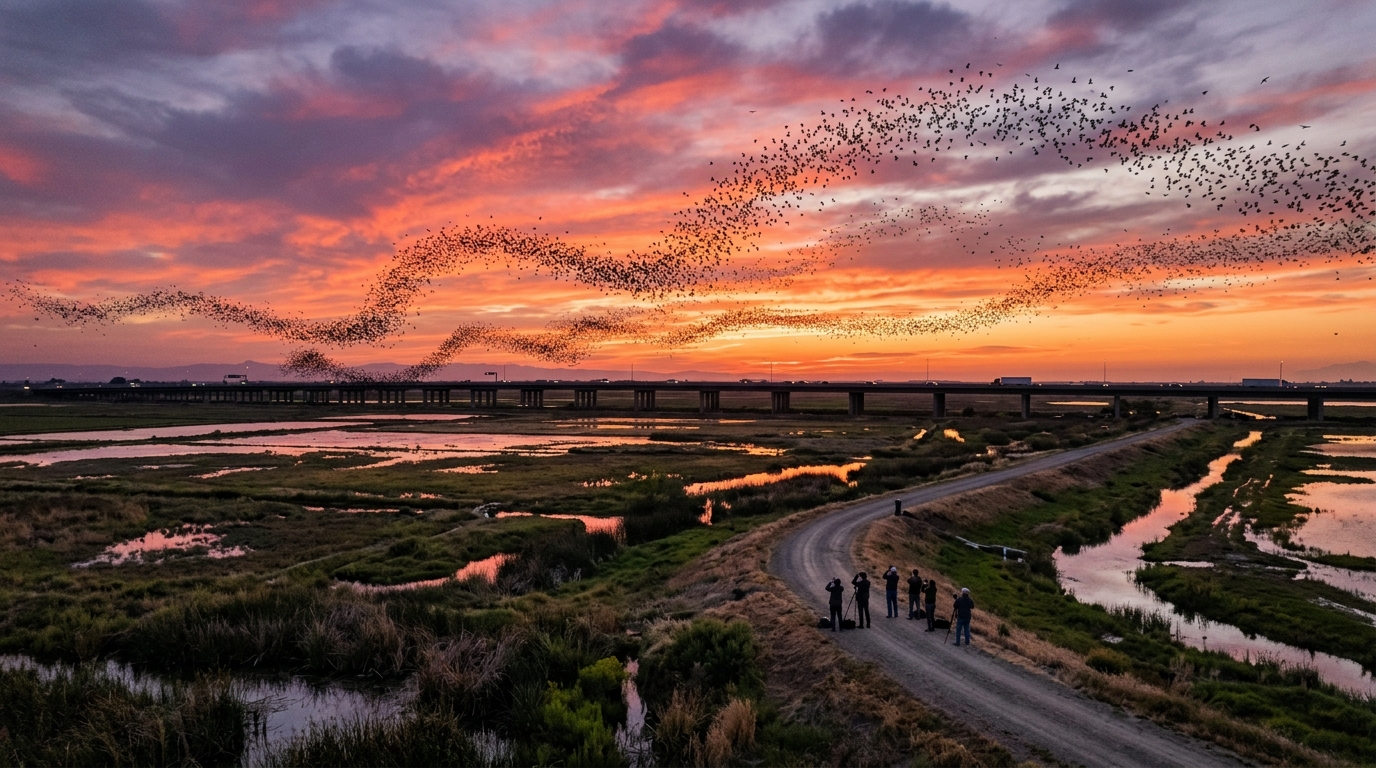
Every summer evening, one of Yolo County’s most memorable wildlife experiences unfolds beside a major transportation corridor. Mexican free-tailed bats leave their daytime roost beneath the Yolo Causeway and stream into the evening sky to feed over wetlands, rice fields, farms, and open country. The movement can look like a dark ribbon stretching across the sunset, turning an ordinary summer night into a regional nature experience.
The Yolo Causeway bat flyout has become especially popular in 2026. The official Yolo Basin Foundation Bat Talk and Tour program reported that its summer tours and waitlist were fully booked, showing how much interest the experience now attracts. That popularity also makes responsible planning essential. Visitors should not stop along Interstate 80, enter restricted land, block agricultural roads, disturb the colony, or assume that every nearby viewpoint is open to the public.
This guide explains what makes the flyout special, when to plan a visit, what to bring, and how to combine the experience with an afternoon in Davis or another Yolo County stop. Before leaving, review our Yolo County Outdoors and Wildlife Guide and Plan Your Visit page for current trip-planning considerations.
Why the Yolo Causeway Bat Flyout Is Worth Planning Around
What Makes the Yolo Causeway Bat Colony Remarkable
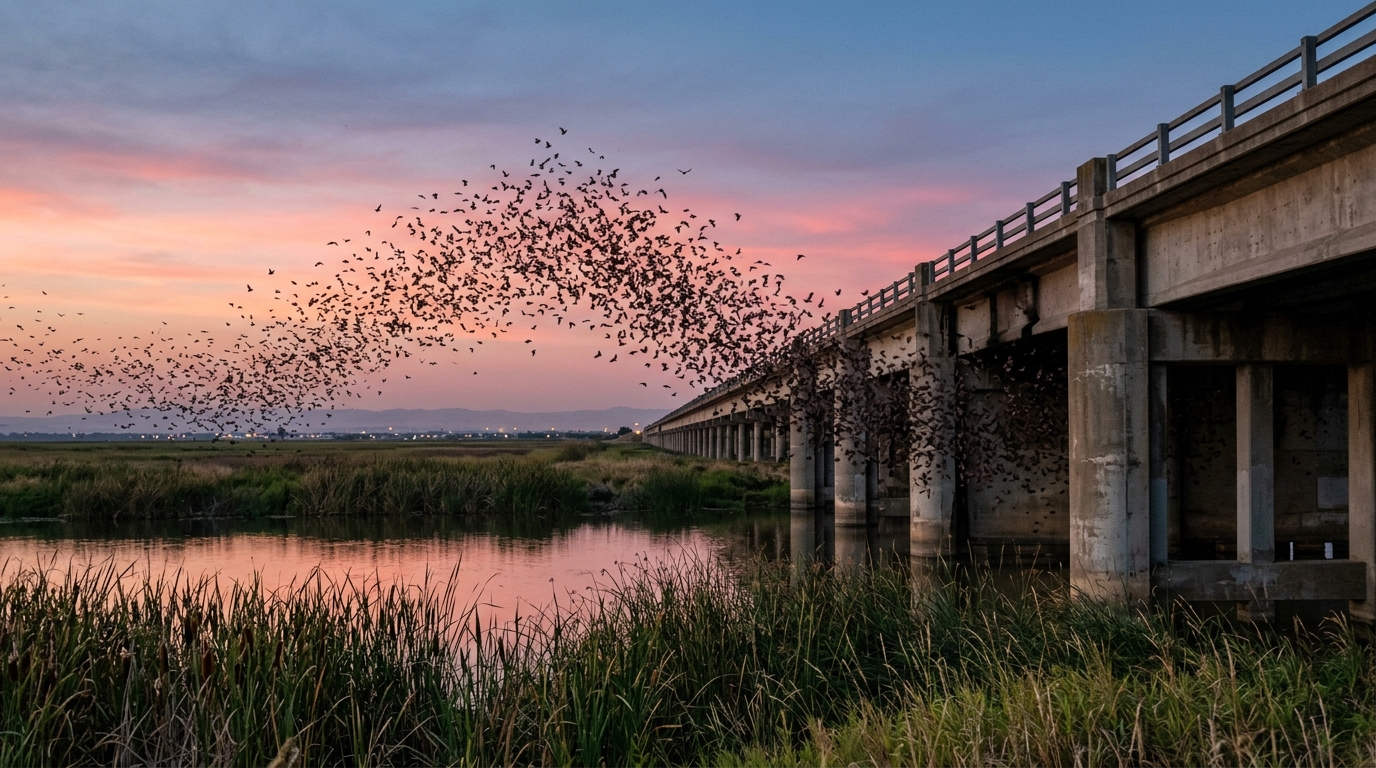
The bats associated with the Yolo Causeway are primarily Mexican free-tailed bats, a migratory species known for fast, high-altitude flight. The bridge provides narrow, warm spaces that function as roosting habitat during the summer. Near sunset, the bats begin emerging and spreading across the surrounding landscape in search of flying insects.
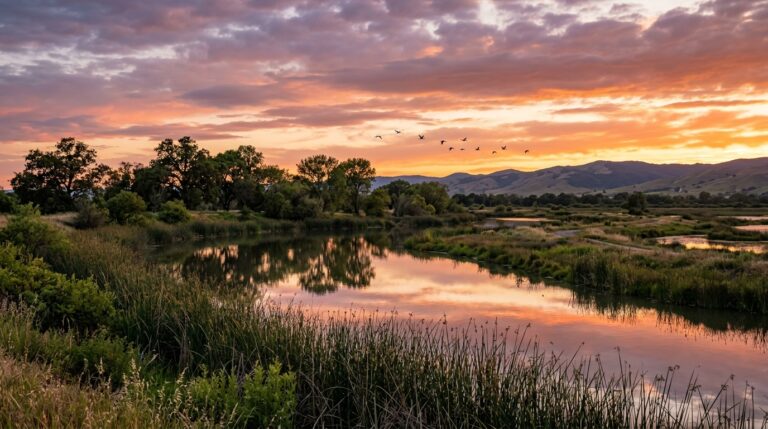
The setting is part of the appeal. The causeway crosses the Yolo Bypass, a flood-management landscape that also supports wetlands, agriculture, and wildlife habitat. From a carefully managed viewing location, visitors may see the sky change from bright Central Valley light to orange, pink, and blue while the bats gather into moving lines overhead. The contrast between freeway infrastructure and a major wildlife event makes the experience unusual even for people who regularly visit parks and preserves.
Bats also play an important ecological role. They consume insects over farmland and wetland areas, making them valuable members of the Sacramento Valley ecosystem. A guided program adds context about bat behavior, migration, echolocation, habitat, and the relationship between the colony and the agricultural landscape. That educational element is one reason the official tours are more rewarding than trying to locate an informal roadside viewing area.
The Best Season and Timing for the Flyout
The organized Yolo Basin Foundation Bat Talk and Tour season generally runs from June through September. Exact emergence timing changes with sunset, weather, temperature, and bat behavior. A flyout is not a scheduled performance that begins at a guaranteed minute, so visitors should arrive early, remain patient, and follow the instructions of guides or site staff.
Late summer can bring hot afternoons, warm evenings, insects, and occasional smoke or poor air quality. Check the current forecast and air-quality conditions on the day of the visit. Bring enough water and avoid building a schedule that depends on rushing from dinner to the viewing site. Sunset traffic between Sacramento and Davis can also affect travel time.
For 2026, the official guided program is already highly booked. Check the Yolo Basin Foundation Bat Talk and Tour page for current announcements, future registration information, and special programs. Do not purchase unofficial access from unverified sellers or assume that a social-media location pin represents a legal viewing area.
How to Experience the Flyout Responsibly
The safest and most informative approach is to attend an authorized program. Guided events are designed around appropriate access, visitor education, safe positioning, and reduced disturbance. They can also help guests understand what they are seeing before the light fades and the colony begins moving quickly across the sky.
Trying to improvise a viewpoint can create serious problems. The causeway is part of Interstate 80, and stopping on freeway shoulders is unsafe. Nearby roads may serve farms, wildlife management, flood-control infrastructure, or private property. Conditions can also change because of seasonal water, construction, habitat management, or emergency closures.
The California Department of Fish and Wildlife lists rules for the Yolo Bypass Wildlife Area, including restrictions on dogs, bicycles, camping, and drone use. Review the official wildlife-area visitor information before entering. A drone is not an appropriate way to record a bat emergence; it can disturb wildlife and may be prohibited without authorization.
Choose Guided Access Over Roadside Viewing
Official access protects visitors and wildlife at the same time. A guide can identify safe stopping areas, explain changing conditions, and keep a group away from restricted zones. It also eliminates the temptation to stand beneath traffic infrastructure, cross uneven ground in darkness, or park where agricultural and emergency vehicles need access.
When official tours are sold out, the responsible choice is to plan for a future season, join an approved educational event, or explore another wildlife experience. The Outdoors and Wildlife Guide includes wetlands, creek corridors, parks, and nature-preserve ideas that can still create a worthwhile Yolo County evening.
What to Bring for a Summer Evening
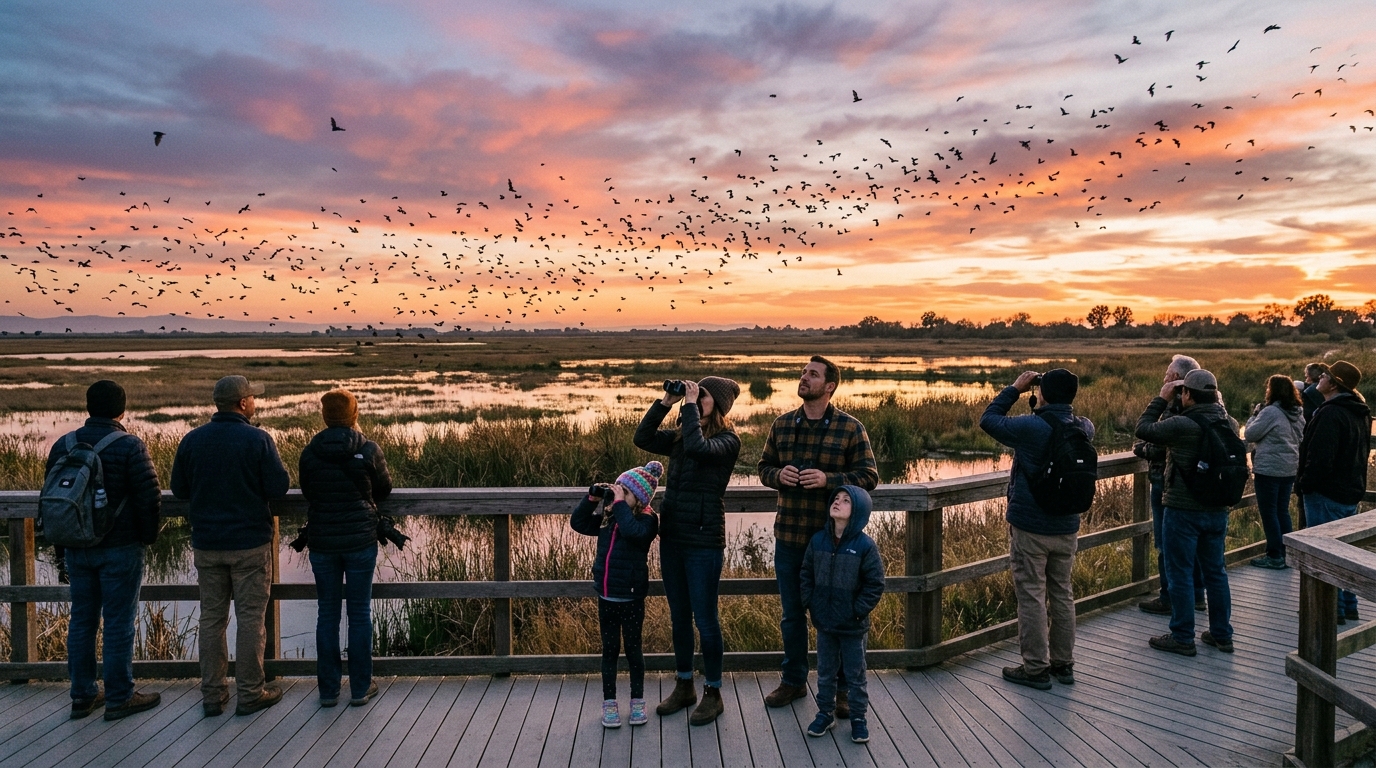
Wear lightweight clothing and closed-toe shoes suitable for dry, dusty, or uneven terrain. Bring drinking water, insect repellent, and a light layer for after sunset. Binoculars can help, although the movement may become visible across a broad section of sky. A small flashlight is useful for returning to a vehicle, but keep bright lights away from wildlife and other visitors during the flyout.
For photography, use a camera that performs well in low light and choose a lens that can capture a wide scene. The goal is not to approach the roost. A stable stance, higher ISO, fast shutter speed, and patience are more useful than moving closer. Avoid flash, bright video lights, loud conversation, and repeated phone-screen glare.
Families should prepare children for a quiet waiting period before the bats emerge. Explain that the experience may involve heat, insects, limited facilities, and darkness. Bring only what can be carried easily, and confirm accessibility details directly with the event organizer before booking.
Build a Complete Bat-Watching Evening in Yolo County
Pair the Flyout With Davis or Woodland
A bat-viewing evening works best as the final activity in a relaxed half-day itinerary. Davis is a practical starting point because it offers restaurants, shaded public spaces, and a compact downtown. The city’s farmers market operates year-round on Wednesdays and Saturdays, making it a natural addition when the schedule aligns. Review our Davis community guide for ideas that fit before an evening program.
Woodland is another useful base, especially for visitors interested in agricultural history and a quieter small-city atmosphere. An afternoon there can include historic streets, local dining, or a stop connected to Yolo County’s farming identity. Keep the itinerary focused rather than trying to include Davis, Woodland, Winters, and the bat flyout in one compressed day.
Visitors coming from Sacramento should also allow for freeway traffic and event check-in time. Arriving too early is better than missing orientation or creating pressure to drive quickly. Confirm the meeting location supplied by the organizer instead of navigating directly to the causeway based on a map search.
A Simple Half-Day Itinerary
Begin in Davis during the middle of the afternoon with a late lunch, coffee, or a walk through a shaded public area. When the market schedule aligns, browse local produce without overloading the car with heat-sensitive items. Allow time to refill water, use restrooms, and organize cameras or binoculars before leaving town.
Next, follow the exact arrival instructions provided by the authorized bat program. Attend the educational presentation, ask questions, and listen carefully to guidance about vehicles, walking, and viewing locations. As sunset approaches, put phones on low brightness, reduce noise, and watch how the bats form patterns rather than focusing only on recording video.
After the flyout, return to Davis or continue toward your accommodation. Avoid adding a long rural drive after dark unless it is necessary and familiar. For a larger trip, use our Yolo County Weekend Itinerary to combine the bat experience with farm-country scenery, local food, and a second-day outdoor route.
The Yolo Causeway bat flyout is memorable because it reveals how much wildlife activity can exist beside familiar roads and working landscapes. Experiencing it well requires restraint: use authorized access, respect closures, keep distance from the colony, and let the evening unfold without forcing a closer view. With careful planning, the flyout can become the highlight of a thoughtful Yolo County summer trip rather than a rushed roadside stop.